The Problem
Most sales pitches are forgettable
99 percent of sales pitches are boring, uninspiring, and unconvincing.
Corporate Training
Sales is about creating a vision in the customer’s mind, a vision of something they want. In Storytelling for Sales, you will learn techniques for telling stories that capture customers’ attention, touch them emotionally, and move them across the gulf from uncertainty to sale.

The Problem
99 percent of sales pitches are boring, uninspiring, and unconvincing.
The Solution
It is not enough just to present information or make an argument. To move people to take action, you need to stir their emotions, and the best way to do that is to tell a story.

Customers do not buy specifications in the abstract. They buy what those specifications will make possible in their lives. A story helps them picture using the product, feel the benefit, and imagine the difference it could make.
Facts still matter. But a story gives the facts meaning, turning a list of features into an experience the customer can see themselves having.
2019 LG Electronics Workshop
In 2019, Jay worked with salespeople at LG Electronics who were selling OLED televisions by emphasizing specifications: refresh rates, pixel counts, color range, black levels, and other technical features. That approach wasn’t working.
During the workshop, Jay asked the salespeople to recall their own experiences watching the televisions. He then taught them how to transform those experiences into stories that customers could picture, feel, and remember.

One salesperson recalled watching a movie in which someone knocked on a door. The sound was so convincing that he got up, opened his own apartment door, and discovered that nobody was there. Instead of merely claiming that the television sounded realistic, he could tell a story that made realism tangible.
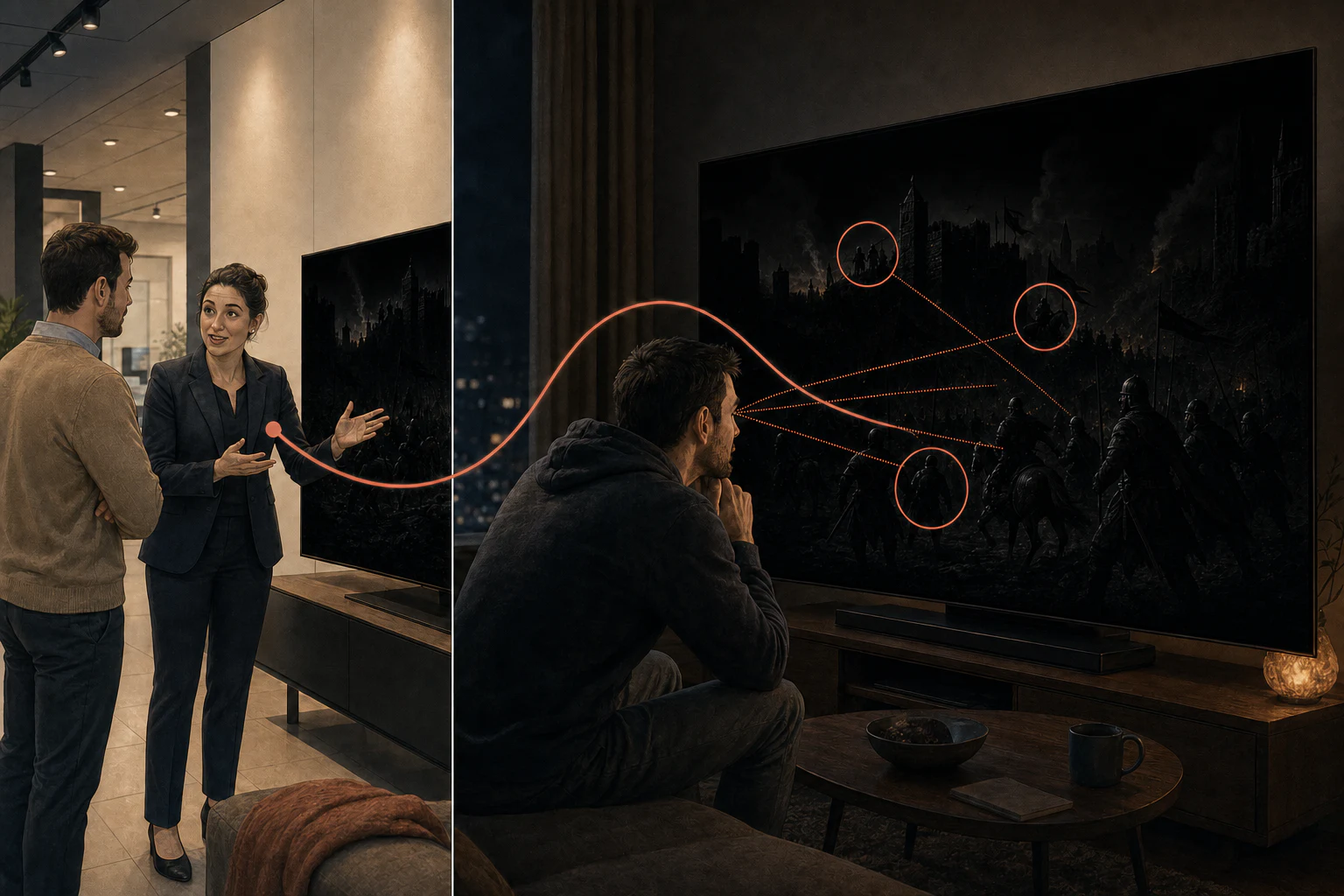
Another salesperson described watching a notoriously dark nighttime battle in Game of Thrones. Many viewers complained that they could not distinguish anything in the darkness. On his LG OLED television, however, the differences between the black tones revealed figures moving through the scene. “True black” became an experience rather than a specification.
The Result
The salespeople immediately understood the method, developed their own stories, and began using them in customer conversations.
What You’ll Learn
Stories can reduce counterarguing and increase narrative transportation, drawing listeners into the experiences and emotions of the narrative. That makes the value of an idea easier to picture and its consequences easier to feel.
By the end of this workshop, you will be equipped with simple, powerful storytelling techniques you can use in emails, client presentations, and sales calls.
If you want the behavioral-science rationale behind these methods, visit Narrative Transportation for the underlying persuasion framework.
Ready to Bring This to Your Team?
If your team needs to sharpen client presentations, clarify value, and make people care faster, this workshop can be tailored to your product, sales cycle, and communication challenges.