Keep the Tension
Keep the listener leaning forward
The strongest stories create a felt need to discover what comes next.
The Science of Storytelling
When you raise a question the listener wants to know the answer to, you create what psychologists call a curiosity gap.
Uncertainty of Outcome
What happens next?
An unanswered question creates forward momentum and active attention.
Why Jay Teaches the Science
Jay studied psychology at Yale and spent years as a Senior Editor at Psychology Today, where he covered neuroscience, decision making, persuasion, and consumer behavior.
More about JayThe Unanswered Question

The unanswered question exists as a hole in the visual field, surrounded by incomplete fragments the mind wants to connect.

Her expression feels curious rather than confused, while many small fragments gather into one dominant unanswered question.

The surrounding evidence almost forms an explanation, but the blank center prevents closure and keeps the investigator mentally engaged.

The trail and giant negative space communicate an unresolved path instantly, with strong editorial impact.
Keep the Rope Taut
You want the listener tugging on the rope, eager to find out what happens next. You don’t want the rope to go slack.

Layered paper gives the figure presence while the rope’s change from tension to slack remains perfectly readable.
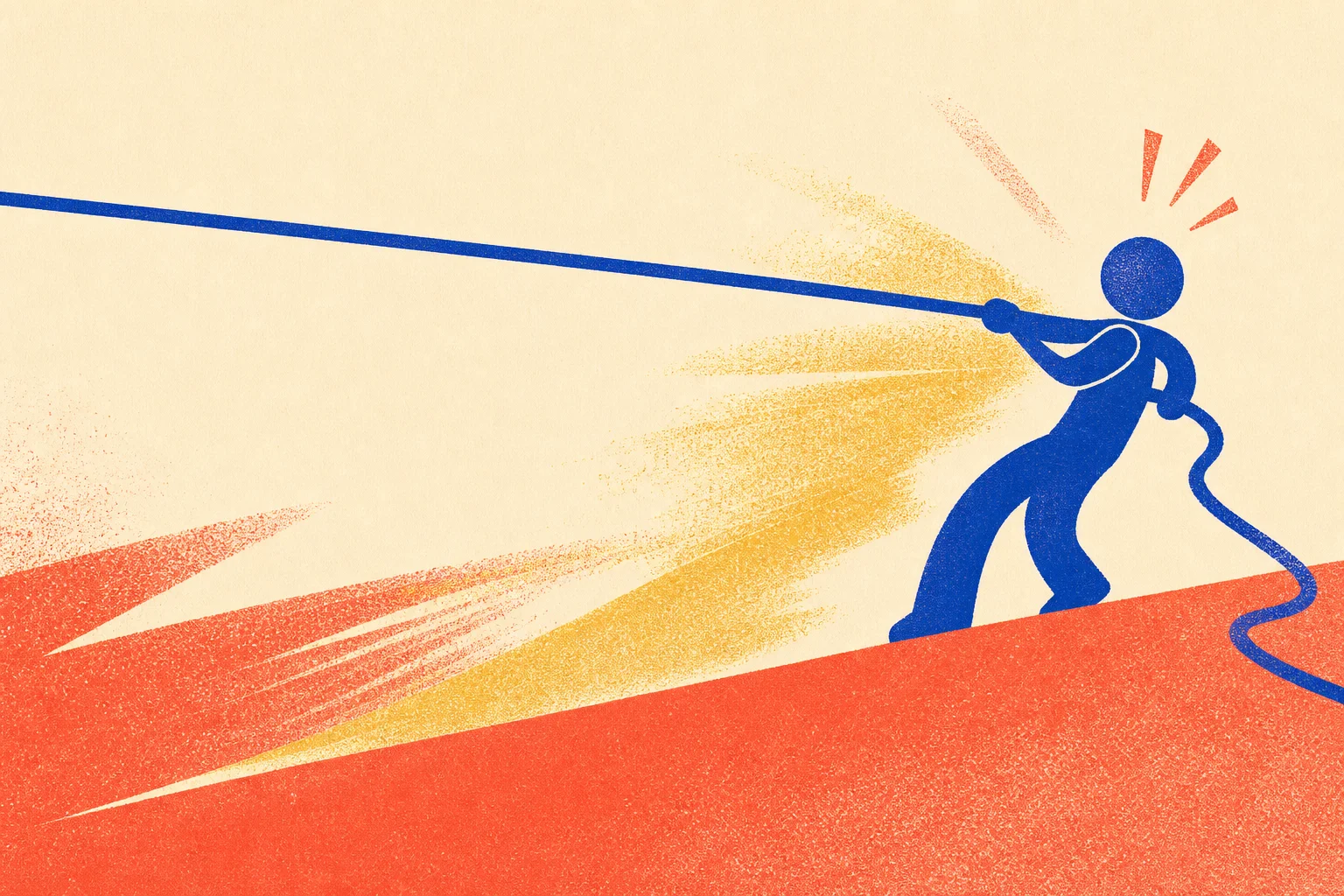
The diagonal rope and rushing ink texture amplify the impulse to pull forward into the unanswered story.
Withhold the Outcome
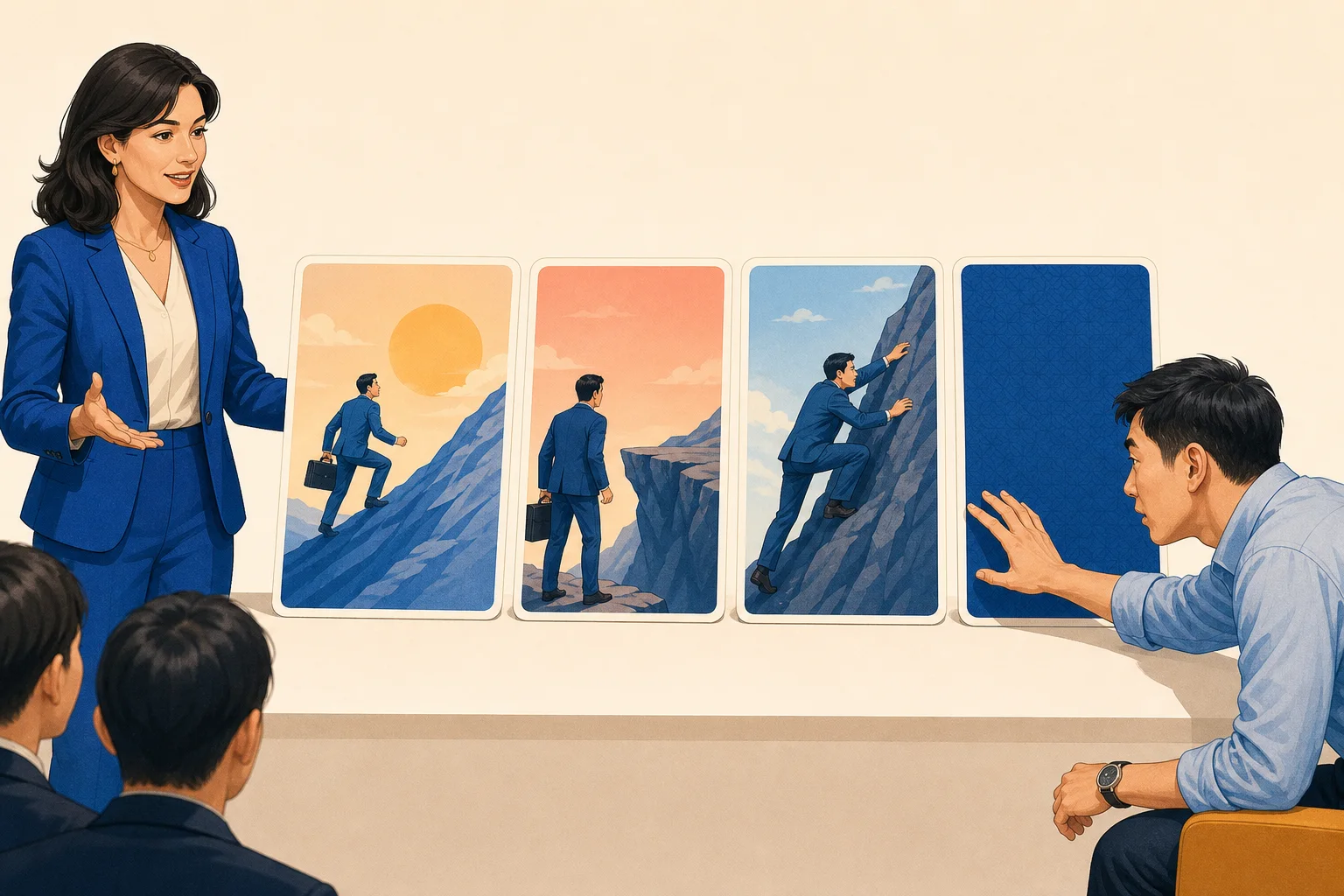
Three visible story beats establish a goal and obstacle; the blank final card turns the outcome into the listener’s dominant question.

The narrow opening supplies one tantalizing fragment while every listener angles forward toward what remains concealed.

A restricted view makes the information gap literal: he can see enough to care, but not enough to know the outcome.
When Curiosity Fails

His classic bored posture and the enormous central heap make the failure unmistakable: she is supplying far more than he wants to receive.
Keep the Tension
The strongest stories create a felt need to discover what comes next.
The Desired Effect
When you raise a question the listener wants to know the answer to, you create what psychologists call a curiosity gap.
The curiosity gap taps into a human need called the need for cognitive closure.
From Theory to Practice